For Father
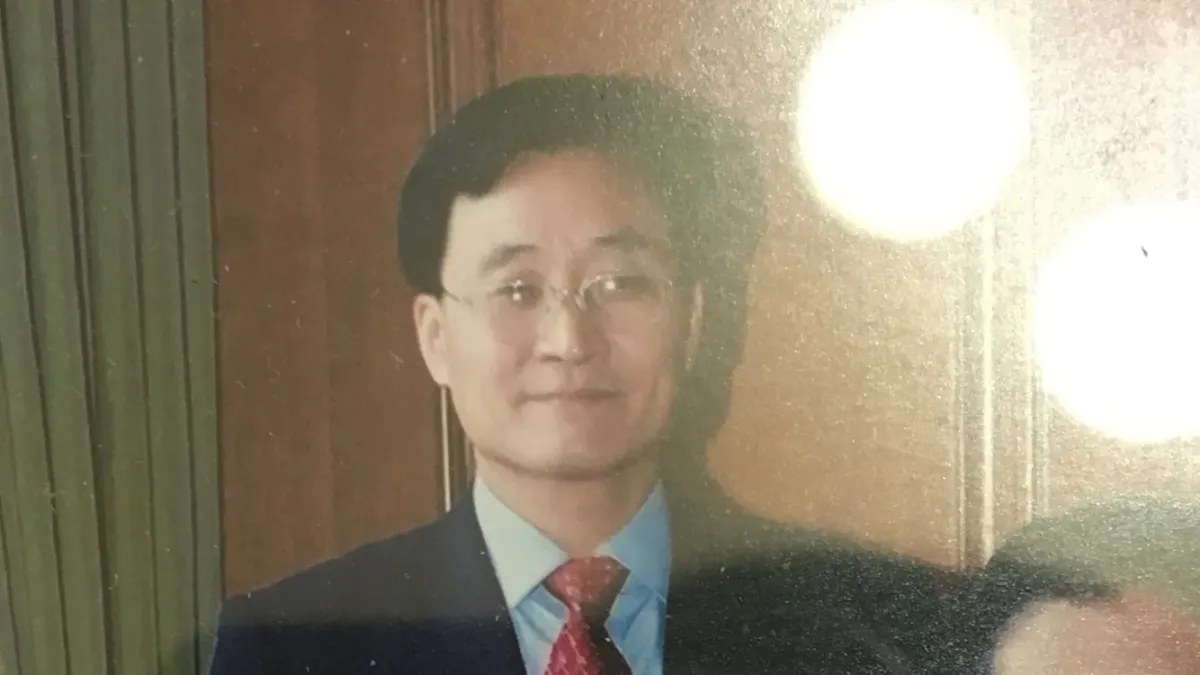
It has been fifteen years since something as simple as the muffled sound of a car engine shutting off in the driveway followed by the metal thud of a closing car door elicited such mixed emotions in me, a combination of anticipatory excitement and quiet dread that only a young boy in the first grade can feel, at the thought of his father coming home from work. The time would be around six or seven in the evening, and the house would be filled with the warm aroma of my mother’s cooking (usually spicy Korean stew and some of the brined fish sent to us by my grandmother’s household back in Korea), she having coordinated the timing of her dinner preparation with my father’s arrival with a phone call I never paid much attention to as I did my homework in the living room. It could have been any evening in the fall or spring (but not the summer, a season for which my childhood memories are dominated by the vacations we took to national parks or back to my parent’s hometowns in Korea, nor the winter, when it was too cold for my father and me to go outside and play catch), but the setting I recall most vividly is the fall, the crisp Houston fall. I think this is because the neighborhood we lived in, the stretch of streets, boulevards and avenues inside the I-10 highway loop known as Bellaire, spanned by streets with names like Oakdale Drive and Avenue B, was a neighborhood most conducive to recollection in the fall. By this I mean to say it was because of the abundance of thick oak trees that lined the neatly paved streets, whose magnificent sense of domesticated wildness (like that of great mastiffs on leashes, the kind I used to spot in malls that would at first startle and then comfort me), was most apparent in the crisp Texas fall, when they had shed enough browned and oranged leaves to remind people of the dark, looming yet wholly comforting presence of their branches overhanging the streets; it was because our neighbors, a decidedly Caucasian assortment of upper-middle class families with young children and aged couples and a few widows whose children had left the nest long ago, can best be encapsulated by Halloween, which is in the fall. That would be the day when the demographic makeup of Oakdale Drive, exaggerated in my memory as vivacious children and old ladies with brilliant white hair, in combination with the shedding, slumbering oak trees lining the neighborhood, made for a night of trick-or-treating fit for the quintessential American Halloween: an abundance of costumed children scurrying about from door to door, the driveways cleared of the usual litter of skateboards and scooters abandoned by children at the call for dinner, the fronts of houses and garage doors without fail decorated with Walgreen’s-bought cobwebs and carved jack-o-lanterns, and most importantly, a few grumpy widows in their sixties on whose front porches the costumed children would nervously debate ringing the doorbell. All of this is to say that there was an implicit safety and sense of community that defined Bellaire, Texas, the neighborhood of my childhood, that I can best recall and describe when it was fall, the one to which my father would come home at around six or seven pm in the silver Oldsmobile he had owned for sixteen years.
I would be lying on my stomach draped like a cat over the leather back of the living room sofa, finishing up my homework, the sizzling and bubbling sounds of my mother’s cooking in the connected kitchen to my left, and Itzhak Perlman’s recording of J.B. Accolay’s Violin Concerto in A Minor playing from the speakers in the living room to my right (the piece that I was at the time practicing). As I listen to it now it sounds so nostalgically wonderful but I remember how tired I was of hearing it on evenings like this, having already practiced it for an hour or two earlier that day, my mother insistent upon playing it in the background afterwards as I did my homework in the hopes that it would improve my rendition of it. Sometimes my homework would be already be finished and I would be draped over the sofa reading a book instead, or watching Spongebob or something on Cartoon Network on the television with my younger brother. And a few moments after hearing the quiet muffled sound of the Oldsmobile engine turning off, the car door closing, and me feeling that sharpening sense of anticipatory excitement and quiet dread, the front door would open and my brother and I would scamper up to greet my father at the door, a rather specific Korean custom in which we were supposed to bow in greeting but whose formality was always undermined by my father hugging each of us, and exclaiming, “Ma boys, how are you!” Still I wince as I imagine the small stubble of his chin grazing my tender cheek during the embrace. My father at the time was a Professor of Economics at Rice University, nearing twenty-five years of teaching, and there was a clockwork sense of precision to his coming home around six or seven in the evening that I took for granted as a child. He was a short slender man, around 5’5”, with a horrible vision corrected by thick trapezoidal glasses with thin golden rims that would give me a terrible headache whenever I tried to wear them, but these traits were compensated for by a thick lovely head of black hair that he kept neatly trimmed that only now at the age of fifty-nine shows signs of greying, a pair of twinkling eyes that hinted at his unique brand of humor defined by his awkward and terribly-timed delivery of jokes that only he would laugh at, and a strong jawline that reflected his stubborn will and intensely philosophical soul (as I contemplate his jawline now, I realize it evokes a quality I can only manage to describe as German, in the sense that Goethe, Nietzsche, Kant, and Herzog are German). He had a terrible sense of fashion, not in the sense that he was overly flamboyant but in that he had no sense of the proper way clothes should fit or how to match colors, to the point that my mother always in exasperation picked out his outfit for important occasions (and still does to this day). His sartorial haplessness, along with his lack of comedic timing, confirms the impression that people who knew him had, that his mind often operated on a slightly different plane than the rest of ours. Increasingly as my brother and I grew older and the sense of gravity and authority that our father cast in our lives diminished, we conspiratorially found in the awkward aspects of his character a great source of amusement. At the time however, in the days when we would greet my father at the door, when we would wince as his stubbled chin grazed us, when the happy aroma of an almost-ready dinner enveloped the house, I hardly noticed these traits of his — and if I did, they were the by-products of a man who was, according to my mother, “a genius.”
There was a certain fog of wonder through which I saw my father as a child, bordering on the mythic, fueled by tantalizing snippets of facts my mother would tell me. He was well-known by the locals in his hometown of Jeonju for his intellect… In his last year of high school, he was expelled and jailed for organizing student protests against Park Chung-hee’s regime in South Korea… Undeterred, he studied on his own and earned one of the highest scores in the country in the national university entrance exams… He went on to study at Seoul National University, the best school. I doubt I understood back then the concept of a regime, or even that of a university. I knew what going to jail meant, but the wonder with which I regarded my father arose not from the facts themselves but from the way my mother would say them, so full of pride and even an implied sense of expectation that such capability was within me as his offspring. All this to explain how an unassuming professor of physically short stature could elicit such awe and excitement in a six-year-old boy.
Dinners usually began the same way, with my mother asking my brother and me to set the silverware and cups, and bring the side dishes from the refrigerator to the table: small dishes of cabbage kimchi, chopped spicy squid, soy-marinated sesame leaves, brined quail eggs, sweet sticky black beans. We sat the three of us, my father and brother and I, and my father would enlist my brother and me in cajoling my mother, who would be cleaning up the kitchen, to come join us at the table. My mother, self-effacing and practical as ever, would wave us off and join the table only when she was finished clearing the kitchen. And here I can begin to explain the simultaneity of excitement and dread I felt around my father as a child, for at the dinner table are the earliest memories of my father’s attempts at parenthood.
There was the matter of teaching my brother and me how to properly use chopsticks, for unbeknownst to us, there were two ways to hold chopsticks: the awkward, fumbling grip that Americans at Chinese restaurants use to some success to bring food to mouths, and the effortless, calligraphic grip that my parents and other Koreans used with such precision that they could pick up a single grain of rice or the most slippery side dish without a second thought. As we ate, my father would inevitably notice a few minutes into the meal that my brother and I were using incorrect chopstick grips and immediately declare a temporary break from eating for a ‘lesson’ in how to hold chopsticks correctly. As my mother watched in supportive silence, he would demonstrate the proper technique in an excruciatingly methodical manner, having us hold one chopstick at a time, first the bottom stick lodged deep in the crevice between the thumb and the index finger, then the top stick held almost like a pencil, and we would practice opening and closing the chopsticks fifty times (my father counting out loud), until he was satisfied and we could resume eating. These impromptu lessons happened rather often, because like goldfish, my brother and I tended to forget by the next day the proper technique.
Yet these lessons would fill me entirely with a pale dread, because they often led to another, more serious interruption of dinner. Ever since I can remember, I had been a compulsive nail-biter, and in those days my father was absolutely hell-bent on ending this habit. However, he only seemed to remember his personal crusade if he physically saw the rough disfigurement of my nails, so there were some nights when he would come home particularly distracted by work or other adult matters and be oblivious to the pitiful state of my nails. This irregularity only served to heighten the uncertainty and dread in me, for I could never be sure if or when he would notice them. They were like a trigger for him, the sight of my chipped, stubby nails, so I tried to keep them out of his sight whenever he was home, and because of this the chopstick lessons always filled me with a particular dull panic. With each practice closing and opening of the chopsticks at the dinner table, I would grow increasingly frantic that my nails were visible, gleaming in their deformity under the harsh light of the dining table, and like a sentenced man waiting for the guillotine to drop I would wait. My father’s reaction when he noticed my nails varied, but again this unpredictability only served to heighten my terror over what kind of outburst he would have. The worst was when he would explode, noticing my nails, reaching out and pulling my hands closer to him while taking off his glasses to squint closely, sighing, eyes furrowed, and then glaring at me before he would say in a sharp, deep-yet-raised voice in Korean that would instantly shatter any warmth at the dinner table: “Again you’ve done it again!” And for a boy who was at that age so meek that he didn’t like using air-powered hand dryers in restrooms because the loud fan noises frightened him, the sharp accusations of his father, his mythic father, would shatter his quivering heart. “Why can’t you stop this ugly habit?” In those moments, with my brother and mother watching in the faded background, I would feel powerless, worthless, incapable of marshalling the willpower — the way I was sure my father could — of ending a stupid, pathetic habit.
But on some occasions — I never knew why or when he would sometimes do this — my father would react more gently, holding my trembling hands and patting me on the back, saying that he trusted me, and believed in me, that I could stop biting my nails, and the dinner would resume, my brother and mother quickly attempting to resume normality, knowing that a crisis had been averted.
I look down now at my stubby, misshapen nails as I write. I never kicked the habit. At some point — I think it was after we moved to Korea after I finished the sixth grade and my father began his major career shift from professor to politician — he stopped noticing my nails. Perhaps he became too busy, as I saw much less of him at home from then on; perhaps as I aged and he aged, the window of opportunity for a father to attempt to stamp out his son’s minute but irritating habit had closed. It was likely a bit of both. It seems almost laughable now looking back at how such a small habit used to fill me with such terror. I even remember one evening as I waited for my father to come home — I was so particularly dreading his outburst at my bitten fingernails that I preemptively broke down and called him at his faculty office, sobbing and apologizing for my nails. He was magnanimous and soothing in his response, but still unwavering in his resolve: “It’s OK, my son. You’re a good boy. You’ll fix this bad habit.”
How strange it seems now to me, how illusory and dreamlike my childhood seems, that at one point in my life the act of my father noticing my bitten nails could take over my entire world, how dread could fill me like dark seawater at the mundane sound of an Oldsmobile engine turning off in the driveway. After our family packed our things and moved away from that neighborhood in Bellaire, I never again felt the unique dread I used to feel when my father came home. He became busy, swathed in an entourage of secretaries, constituents, and a driver, trappings that represented his immigration to a strange new world of politics. He remained mythic, if for other reasons, only I no longer revolved around him, awaiting his clockwork return home, dependable and significant as a sunset, in the living room.
My father’s stint in politics did not last long. He had successfully run for the seat in the National Parliament representing his hometown district, which had been vacated by his childhood friend, a career politician, as part of his machinations to run for President in 2007. When my father’s childhood friend lost in the presidential election, his — and my father’s — party was left in disarray. In the reshuffling that followed, my father was left out; the party would not be backing him for a reelection bid. There exist two types of reasons to explain why things happen in the world. One type is the journalistic reason. He had not pushed through enough legislation; his association with his friend, the loser of the presidential election, cast him with a lot of losers, in a sinking ship. Of journalistic reasons I know only the topical facts. The other type of reason for why things happen wells up from somewhere deeper down and more native than the human capacity for speculation. My father was never meant to be in politics. He was an academic through and through; a man with such strict moral boundaries that he frequently frustrated his more pragmatic staffers; a man of great intelligence but socially inept, who would openly zone out at dinner conversations if his guests bored him (at which point it was left to my mother, full of grace and wit, to rescue the mood); someone of immense stubbornness and an overtly methodical attention to detail. The slick, ruthless arena of Korean politics was no place for a man who stopped a dinner over bitten nails.
I was away from home, finishing my tenth grade at a boarding school in New Hampshire, when I found out about this ignominious end to this chapter in his life. When I came home that summer I found that my father had stopped drinking (he used to come home tipsy all the time from dinners schmoozing with all manner of constituents and powerful people who ran the country) and spent long hours reading the Bible alone and meditating. I became aware that this was the first time in my life I had seen him taking a break from the world. As a professor he had always been driven by his research, while as a M.P. he had been driven by his politics; he had been like the mechanical movement of a clock, the coiled springs and spinning escapements of his ambition and purpose whirring along until by some sudden intervention, everything had stopped. The sense of wonderment was shattered, replaced by a man who was now jobless (although the joblessness never truly worried me; perhaps I always assumed he would return to academia, which he in fact did).
Sometime that summer, I had my first real fight with my father. By real I mean to say that it was the first fight well something was at stake. During the fight, I no longer felt that primal fear and respect that I had always associated with my father, and I felt the first stirrings (like a rush of adrenaline) of the realization, unfounded or not, that he and I were more like equals, which is to say that he was not the mythic figure that I had once thought he was. And aside from the obvious reason why, some of the cause could be attributed to the hormonal effects of puberty. Some of it too must have been the cocksuring influence of my boarding school education, where a curriculum that included reading philosophical pillars like Plato’s Allegory of the Cave worked its rebellious grease into the cogs of my soul. The world is not what it seems. My parents could be wrong. My teachers could be wrong. I do not remember what the fight was about, but I remember so clearly the change that came over my father when he saw in my eyes near the climax of our shouting that I would not bend to him, that I was more than willing if necessary to leave the comfort and warmth of the house, of his house. He looked bewildered, like a stray cat that had been cornered (something about the way his eyebrows raised evoked the shocked fur of a stray cornered cat) and after a moment so tense my heart was afraid to beat, he left the room without a word.
When he returned, he had a strangely serene but defeated air about him, and exhaling as if waves of exhaustion had come over him, he sat down in a meditative pose and beckoned for me to join him. I noticed then, in the aftermath of my first real fight with my father, how physically frail he looked. The smallness of his frame became apparent to me then, and it occurred to me he had over the years lost weight since his days in Houston, since he had left politics. The bones and veins under his limbs were more defined, his cheekbones sharper, his body not quite brittle but certainly on the way to becoming so, the way my grandfather’s limbs were. His hair was still a lovely black but no longer as thick, limp, and I could detect a faint tremor in his right arm as he sat, eyes closed, legs crossed. I joined him, sitting across from him, peering at his serene and exhausted face, and when he smiled gently, I felt an entirely new kind of fear, not acute and panic-inducing like back when I was young, but melancholy and muted, like a minor chord. His smile was one of acceptance, a wistful acceptance of losing something, and this was new and foreign to me and strangely unsettling. I remember trying to guess as I sat with him the thoughts that ran behind those gold-rimmed glasses, those closed eyes. I wondered if he too had had such a moment with his father. I wondered about his childhood, and tried to picture his old neighborhood, probably some humble stretch of narrow streets and aging store signs in his hometown of Jeonju. Perhaps, I remember thinking then, he had taken his own childhood memories with his father out of some dusty box in a corner in his mind and this was why he was smiling. I imagined him thinking about this because I couldn’t help but think about my own childhood with a melancholy, muted fear, which came from the realization that my childhood was over, that it had slipped away from me quietly during all these years and returned back to those crisp fall evenings in Bellaire, to be amongst the thick trees and toys scattered across driveways.
After dinner was over, as my mother would clear the table and wash the dishes and my brother would scamper upstairs to play with his toys, my father and I would take our baseball gloves from the garage and set out of the house, under the watchful eaves of the oak trees and the stars beginning to appear in the night sky. We would walk a block over to the baseball field in the neighborhood park to practice my pitching (until we moved away to Korea, I played Little League baseball). This was the highlight of my evenings — the reason he filled my heart in those days not just with dread, but with a leaping excitement. The summer mosquitos would have been killed off by the chill by then, and the fleeting notes of chalk and clay dirt and sweat-stained leather of the baseball gloves mingled in the crisp fall Houston air. Under the bright park lights, against the fading sunset, my father would squat at the catcher’s mound and pound his glove as I stepped into my pitching motion. He used to tell me that when he was a kid, he wanted to grow up to become a professional baseball player. I remember always being thrilled by this admission of his — one of the few facts he told me about his childhood. Around this single fact I would construct entire narratives: my father as a child, the Little League superstar, who blasted home runs every time he stepped up the plate and made batters whiff on every fastball he threw. Into his waiting glove I would hurl the worn baseball with all my might, my heart rising and rising. And my father, my magnificent father, his eyes glinting behind his golden-rimmed glasses, smiling with each thump as the white ball disappeared into his glove in a cloud of dust.